







| Re: Regulated rail fares frozen in England until March 2027 Posted by ChrisB at 20:19, 9th December 2025 |     |
Catch!!
TfL fares ARE going up - by the full RPI+1% (5.8%) in March. The TfL funding deal from the Spending Review trumps Heidi's fare freeze elsewhere in England - and this requires annual price increases of RPI+1% until the end of the settlement period. This includes Travelcard prices & fares on the Elizabeth Line too.
From The Standard, via MSN
Exclusive: Londoners face inflation-busting 5.8% rise in Tube fares
At a glance
• TfL fares are likely to rise by 5.8% next March, as required by the Government’s funding deal (RPI + 1), meaning no freeze for Tube, Overground, Elizabeth line or Travelcards despite the national rail fares freeze
• Typical Tube fares will increase by 5p–20p, raising, for example, a Zones 1–2 peak fare from £3.50 to £3.70, but bus fares may be protected
• City Hall says the above-inflation rise is tied to securing £2.2bn in funding, with money from fares and road-user charges helping to fund new Piccadilly line trains and the DLR expansion
Tube fares in London are set to rise by an inflation-busting 5.8 per cent, Sir Sadiq Khan has confirmed to The Standard.
The mayor made clear that the national rail fare freeze would not result in a similar freeze in Transport for London fares from next March.
It means that passengers using rail services in London, such as the Elizabeth line and the London Overground, will not benefit from the national rail fares freeze.
Nor will passengers who use Travelcards, as the cost of these “combined” tickets – which cover national rail services and TfL services – are also expected to increase by a similar amount.
It could mean the cost of a single Zones 1-2 Tube ticket, for example, between Highbury & Islington and Oxford Circus, would increase from £3.50 to £3.70 for a peak-hours journey and from £2.90 to £3.10 off-peak.
A zones 1-6 Tube journey, such as from Uxbridge to Baker Street, could increase from £5.80 to £6.15 at peak times and from £3.80 to £4.05 off-peak.
Tube fares only increase by 5p or 10p or similar increments, meaning the precise increase may be above or below the 5.8 per cent overall average.
Sir Sadiq said a rise equivalent to one percentage point above the RPI rate of inflation was a condition of the £2.2bn capital funding deal that TfL secured from Chancellor Rachel Reeves in June’s spending review.
He said this requirement – which requires above-inflation fare rises every year until the end of the decade – was “not unreasonable” and was “fair”.The mayor takes the national fare changes into consideration when he sets TfL fares for the forthcoming year.
In March this year, when national rail fares rose by 4.6 per cent, most TfL fares – other than bus fares - increased by the same amount.
However, mayoral sources pointed to four years of partial fares freezes pre-pandemic - and a fifth year before the 2024 mayoral election - as evidence that the mayor did not always replicate what happened nationally.
Last month, Transport Secretary Heidi Alexander decided to freeze “regulated” rail fares – those typically paid by commuters – from March 2026, the first freeze in national rail fares in 30 years.
Asked by The Standard whether he would be able to replicate the national rail fares freeze when he sets TfL fares, the mayor made clear this was not an option.
Speaking at the launch of a new ferry across the Thames, Sir Sadiq said: “What Government didn’t announce was individual cities freezing their fares.
“Londoners know that when we had the deal with the Government on the SR [spending review], the Government gave us £2.2bn – the biggest ever multi-year deal we have received in more than a decade.
“One of the things the Government said was that they’d expect us to raise our fares by RPI+1, which pays for around £450m towards capital investment.
“So that was not an unreasonable request from the Government, because the Government’s contributing hugely. They are not unreasonably saying, as grown-ups, we should also contribute. I think that is fair.”
Exact details of the new fares are likely to be published shortly before Christmas.
Sir Sadiq has a long-established practice of keeping bus fares as low as possible, so an “across the board” hike is not guaranteed.
Asked to clarify that a fares freeze was not on the cards for London, Sir Sadiq said: “No. The DfT were quite clear: the announcement from the Government was for a national rail fares freeze.
“So if you go from Euston to Manchester, or from King’s Cross to Newcastle, that was what the Government’s announcement was for. It wasn’t for travelling within Manchester, travelling within Liverpool, or travel within London.”
Travelcards are also expected to rise as they cover the cost of TfL fares and national rail fares.
But there is a risk that TfL’s share of the revenue from Travelcards may not be as high as expected, because of the national rail fares freeze.
Sir Sadiq said City Hall was talking to DfT and the Treasury to compensate TfL for any “knock-on consequences”.
He said: “The good news is that… we are working with them constructively to make sure there isn’t any adverse consequences on London.”
In her letter to Sir Sadiq in the wake of the June spending review, Ms Alexander stated: “The funding in this settlement is provided against an assumed scenario that overall TfL fares will rise by the value of RPI+1 for each year of this settlement.”
Money raised from fares and road user charges is reinvested by TfL into maintaining and improving the capital’s public transport network.
Fleets of new Piccadilly line and DLR trains are due to enter service in 2026, Oxford Street is set to be part-pedestrianised and planning work will begin on extending the DLR to Thamesmead.
The figure traditionally used for the calculation of fares is the July RPI inflation rate – which this year was 4.8 per cent.
The more commonly used CPI rate of inflation was 3.8 per cent in October.
Regulated train fares are those that are set, or regulated, by the Government, such as commuter fares and season tickets.
They exclude fares that train companies can set by themselves, which include first class tickets and advance tickets.
At a glance
• TfL fares are likely to rise by 5.8% next March, as required by the Government’s funding deal (RPI + 1), meaning no freeze for Tube, Overground, Elizabeth line or Travelcards despite the national rail fares freeze
• Typical Tube fares will increase by 5p–20p, raising, for example, a Zones 1–2 peak fare from £3.50 to £3.70, but bus fares may be protected
• City Hall says the above-inflation rise is tied to securing £2.2bn in funding, with money from fares and road-user charges helping to fund new Piccadilly line trains and the DLR expansion
Tube fares in London are set to rise by an inflation-busting 5.8 per cent, Sir Sadiq Khan has confirmed to The Standard.
The mayor made clear that the national rail fare freeze would not result in a similar freeze in Transport for London fares from next March.
It means that passengers using rail services in London, such as the Elizabeth line and the London Overground, will not benefit from the national rail fares freeze.
Nor will passengers who use Travelcards, as the cost of these “combined” tickets – which cover national rail services and TfL services – are also expected to increase by a similar amount.
It could mean the cost of a single Zones 1-2 Tube ticket, for example, between Highbury & Islington and Oxford Circus, would increase from £3.50 to £3.70 for a peak-hours journey and from £2.90 to £3.10 off-peak.
A zones 1-6 Tube journey, such as from Uxbridge to Baker Street, could increase from £5.80 to £6.15 at peak times and from £3.80 to £4.05 off-peak.
Tube fares only increase by 5p or 10p or similar increments, meaning the precise increase may be above or below the 5.8 per cent overall average.
Sir Sadiq said a rise equivalent to one percentage point above the RPI rate of inflation was a condition of the £2.2bn capital funding deal that TfL secured from Chancellor Rachel Reeves in June’s spending review.
He said this requirement – which requires above-inflation fare rises every year until the end of the decade – was “not unreasonable” and was “fair”.The mayor takes the national fare changes into consideration when he sets TfL fares for the forthcoming year.
In March this year, when national rail fares rose by 4.6 per cent, most TfL fares – other than bus fares - increased by the same amount.
However, mayoral sources pointed to four years of partial fares freezes pre-pandemic - and a fifth year before the 2024 mayoral election - as evidence that the mayor did not always replicate what happened nationally.
Last month, Transport Secretary Heidi Alexander decided to freeze “regulated” rail fares – those typically paid by commuters – from March 2026, the first freeze in national rail fares in 30 years.
Asked by The Standard whether he would be able to replicate the national rail fares freeze when he sets TfL fares, the mayor made clear this was not an option.
Speaking at the launch of a new ferry across the Thames, Sir Sadiq said: “What Government didn’t announce was individual cities freezing their fares.
“Londoners know that when we had the deal with the Government on the SR [spending review], the Government gave us £2.2bn – the biggest ever multi-year deal we have received in more than a decade.
“One of the things the Government said was that they’d expect us to raise our fares by RPI+1, which pays for around £450m towards capital investment.
“So that was not an unreasonable request from the Government, because the Government’s contributing hugely. They are not unreasonably saying, as grown-ups, we should also contribute. I think that is fair.”
Exact details of the new fares are likely to be published shortly before Christmas.
Sir Sadiq has a long-established practice of keeping bus fares as low as possible, so an “across the board” hike is not guaranteed.
Asked to clarify that a fares freeze was not on the cards for London, Sir Sadiq said: “No. The DfT were quite clear: the announcement from the Government was for a national rail fares freeze.
“So if you go from Euston to Manchester, or from King’s Cross to Newcastle, that was what the Government’s announcement was for. It wasn’t for travelling within Manchester, travelling within Liverpool, or travel within London.”
Travelcards are also expected to rise as they cover the cost of TfL fares and national rail fares.
But there is a risk that TfL’s share of the revenue from Travelcards may not be as high as expected, because of the national rail fares freeze.
Sir Sadiq said City Hall was talking to DfT and the Treasury to compensate TfL for any “knock-on consequences”.
He said: “The good news is that… we are working with them constructively to make sure there isn’t any adverse consequences on London.”
In her letter to Sir Sadiq in the wake of the June spending review, Ms Alexander stated: “The funding in this settlement is provided against an assumed scenario that overall TfL fares will rise by the value of RPI+1 for each year of this settlement.”
Money raised from fares and road user charges is reinvested by TfL into maintaining and improving the capital’s public transport network.
Fleets of new Piccadilly line and DLR trains are due to enter service in 2026, Oxford Street is set to be part-pedestrianised and planning work will begin on extending the DLR to Thamesmead.
The figure traditionally used for the calculation of fares is the July RPI inflation rate – which this year was 4.8 per cent.
The more commonly used CPI rate of inflation was 3.8 per cent in October.
Regulated train fares are those that are set, or regulated, by the Government, such as commuter fares and season tickets.
They exclude fares that train companies can set by themselves, which include first class tickets and advance tickets.
| Re: Regulated rail fares frozen in England until March 2027 Posted by grahame at 19:18, 23rd November 2025 | |
Simon Calder, writing on the fares changes and some possible consequences in the Independent. Also, his article makes some play on Didcot - Swindon being the most expensive main line leg in the UK, not sure if that's the cost with respect to time on the train perhaps.
There's your answer, in the articlea boggling £2.20 per minute, making it the most expensive main line train trip in Britain
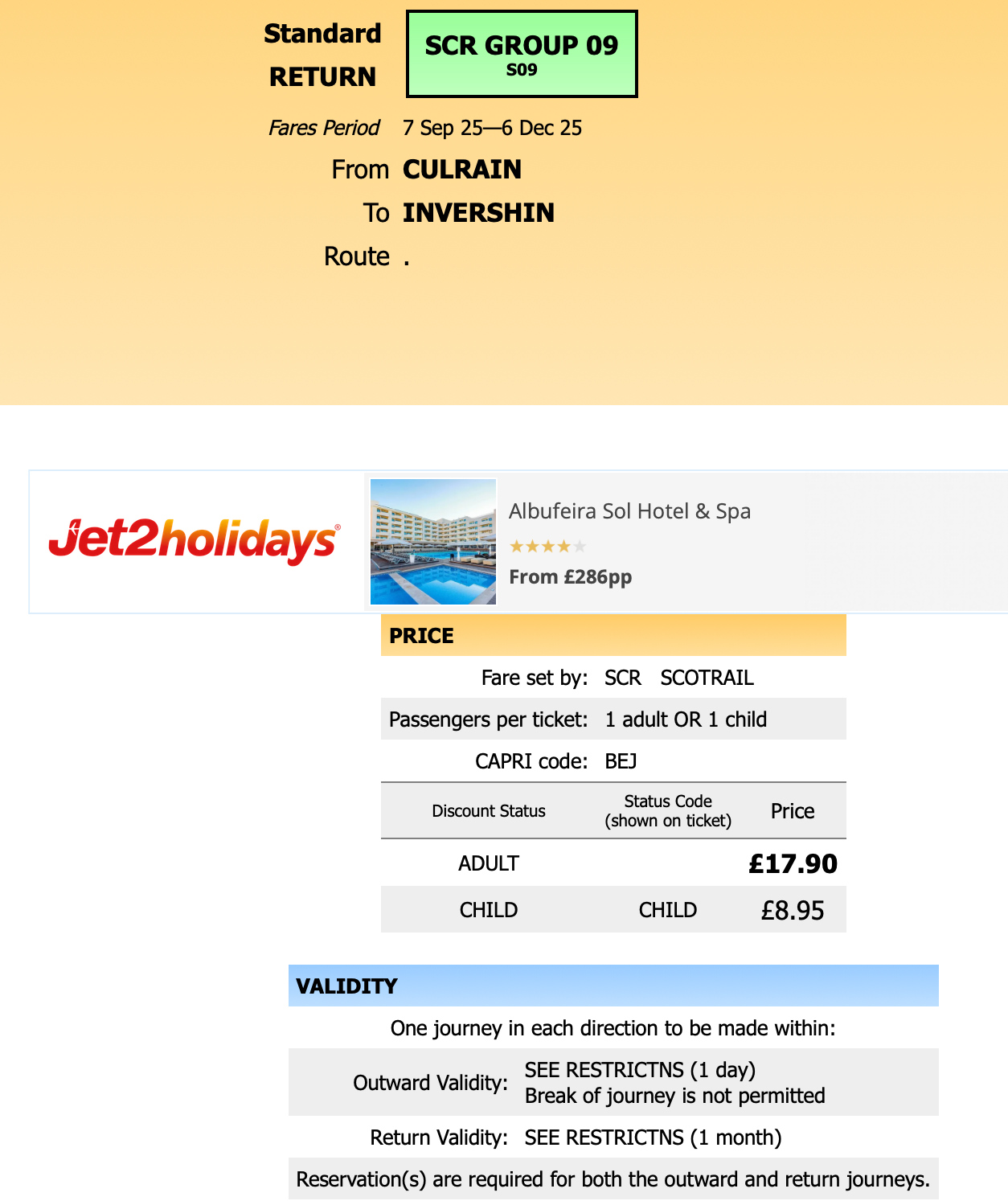
- basing it on pence per minute.Ther are more expensive fares off the mainline ... I can't imagine anyone buying this:
| Re: Regulated rail fares frozen in England until March 2027 Posted by Ralph Ayres at 17:15, 23rd November 2025 | |
A freeze - or at least its end - could have been an opportunity to reset the annual increase back to the slightly more logical early January rather than a completely random date in March, which was only chosen the first time as it was about the earliest the rail industry could reliable manage to change the data once the government of the time decided to end the pandemic fares freeze. After that it was impossible to move back to January as two (main) fares increases within 10 months wouldn't have been politically acceptable.
Specifically promising a freeze till March 2027 has blown that or the even better alternative of aligning with a timetable change date. Looks like we're stuck with March for the foreseeable future.
| Re: Regulated rail fares frozen in England until March 2027 Posted by ChrisB at 14:57, 23rd November 2025 | |
Simon Calder, writing on the fares changes and some possible consequences in the Independent. Also, his article makes some play on Didcot - Swindon being the most expensive main line leg in the UK, not sure if that's the cost with respect to time on the train perhaps.
There's your answer, in the article
a boggling £2.20 per minute, making it the most expensive main line train trip in Britain
- basing it on pence per minute.Mick Whelan, general secretary of train drivers’ union Aslef, said: ‘We are pleased that after 14 years of the Tories pricing people off our railways, this Labour government is helping people to commute to work and travel for pleasure.”
Labour started theis abnnual RPI% raise.....and I'm betting that Mick is saying to the taxpayer that they can all pay for his members pay rise this year, rather than just the rail users....oh yes, Calder agrees....
from what is, in effect, a decision to make long-suffering taxpayers pay even more to keep the trains running – even though many of them never go near a train.
| Re: Regulated rail fares frozen in England until March 2027 Posted by Mark A at 13:28, 23rd November 2025 | |
Simon Calder, writing on the fares changes and some possible consequences in the Independent. Also, his article makes some play on Didcot - Swindon being the most expensive main line leg in the UK, not sure if that's the cost with respect to time on the train perhaps.
Mark
https://www.independent.co.uk/travel/news-and-advice/rail-fare-freeze-analysis-rachel-reeves-budget-train-tickets-b2870286.html
| Re: Regulated rail fares frozen in England until March 2027 Posted by ellendune at 13:24, 23rd November 2025 | |
I'm a bit confused at to what counts as a regulated fare. Anytime return fares are to rise by, is it 4.7% - and if someone needs to travel urgently those fares can be their only option.
Regulated fares in the former Network South East area are different to the rest of the country. In the NSE area are the anytime fares regulated or the day returns or both?
In the rest of the country the saver fares are regulated.
Are season tickets regulated in both?
Please somone correct me if I am wrong.
| Re: Regulated rail fares frozen in England until March 2027 Posted by Mark A at 13:13, 23rd November 2025 | |
I'm a bit confused at to what counts as a regulated fare. Anytime return fares are to rise by, is it 4.7% - and if someone needs to travel urgently those fares can be their only option.
Mark
| Regulated rail fares frozen in England until March 2027 Posted by JayMac at 23:20, 22nd November 2025 | |
There will be no fares price rise early next year, with prices of regulated fares, such as season tickets and off peak returns, frozen at their current levels until March 2027.
I suspect this is one sop to the electorate ahead of the budget.
https://www.bbc.com/news/articles/cwygx71g3n7o
